Satyajeet Das

I am a third-year PhD student in Computer Science at the University of Southern California, advised by Prof. Gaurav Sukhatme.

I earned my master’s degree at the University of Pennsylvania, specializing in robotics and machine learning. At the GRASP Laboratory, I worked with Profs. Nadia Figueroa, Nikolai Matni, Lars Lindemann, Ruzena Bajcsy, and George Pappas.

In summer 2026, I was a research intern at Stack AV, working on post-training adaptation of vision-language-action (VLA) models for autonomous trucking.

Research

I work on robot learning, focusing on the performance, efficiency, and adaptability of learned policies. My research spans post-training adaptation and behavior steering of pretrained policies, generative policies, world models, and VLA models. I use methods from reinforcement learning, imitation learning, and representation learning.

A central theme in my research is how targeted edits to internal policy activations can steer behavior at inference time, complementing fine-tuning for deployment-time adaptation. My long-term goal is to develop generalist robot policies that operate reliably in complex real-world environments, adapt to new tasks and objectives, and work safely alongside people.

Publications

Steering Multirobot Behavior via Closed-Loop Affine Activation Editing

Satyajeet Das, Darren Chiu, Shashank Hegde, Gaurav S. Sukhatme

arXiv

CLAE enables closed-loop behavior steering of frozen robot policies through small, state-dependent edits to internal activations at inference time. It provides a lightweight way to adapt pretrained policies to new behavioral objectives, including injecting behaviors beyond the base policy’s original objective, without modifying the base policy weights, demonstrated across individual and coordinated multirobot behaviors.
Coming soon

Data-Efficient Adaptation of a Driving VLA to Class 8 Trucks

arXiv coming soon

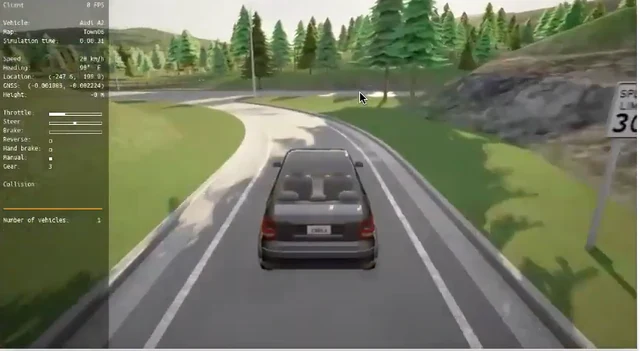
We adapt a pretrained driving VLA to Class 8 trucks using a few hundred real-world scenarios. Our adapt-then-steer approach combines targeted fine-tuning with lightweight inference-time steering to improve trajectory predictions in long-tail truck-driving scenarios.

Latent Activation Editing: Inference-Time Refinement of Learned Policies for Safer Multirobot Navigation

Satyajeet Das, Darren Chiu, Zhehui Huang, Lars Lindemann, Gaurav S. Sukhatme

ICRA 2026

LAE steers pretrained robot policies at inference time by editing internal activations instead of retraining the policy. A latent collision world model predicts pre-collision activations and uses them to replace unsafe activations online, reducing collisions by nearly 90% in multi-quadrotor navigation while preserving task completion.

WARPD: World model Assisted Reactive Policy Diffusion

Shashank Hegde, Satyajeet Das, Gautam Salhotra, Gaurav S. Sukhatme

arXiv

WARPD shifts diffusion-based robot learning from generating open-loop trajectories to generating reactive closed-loop policies. Using latent diffusion and a co-trained world model, it enables longer action horizons, robustness to perturbations, and substantially lower inference cost while maintaining strong task performance.

Latent Weight Diffusion: Generating Reactive Policies instead of Trajectories

Shashank Hegde, Satyajeet Das, Gautam Salhotra, Gaurav S. Sukhatme

NeurIPS 2025 Embodied World Models for Decision Making Workshop, RSS 2025 Resource constrained robotics workshop

Latent Weight Diffusion (LWD) introduced the shift from trajectory generation to policy generation, where a diffusion model learns a latent trajectory space and a hypernetwork decoder transforms it into policy weights, yielding reactive closed-loop policies. This approach delivers long-horizon robustness and achieves ~45x lower inference compute while maintaining SOTA performance across manipulation and locomotion tasks.

Real-Time Perception Based Control Barrier Functions for Efficient Robotic Navigation Using Depth Camera

Satyajeet Das, Yifan Xue, Haoming Li, Nadia Figueroa

SII 2026

RNBF brings NeRF (Neural Radiance Fields)-inspired 3D scene reconstruction directly into the robot's control loop by learning continuous, differentiable neural signed distance fields (SDFs) online from noisy RGB-D input. Unlike prior methods that are offline or require pretraining, RNBF updates its neural SDFs in real time (5–15 Hz) and feeds them into standard Control Barrier Function (CBF-QP) controllers, enabling safer navigation in unknown environments using only a depth camera.

On the Feasibility of EEG-based Motor Intention Detection for Real-Time Robot Assistive Control — research illustration

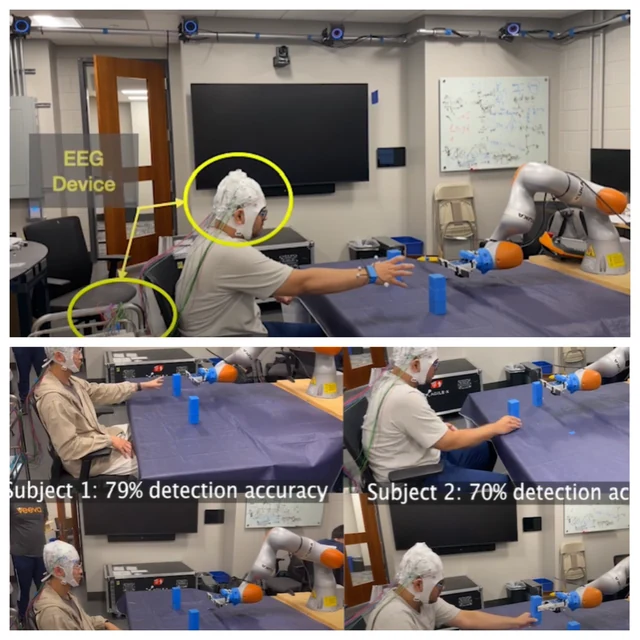
On the Feasibility of EEG-based Motor Intention Detection for Real-Time Robot Assistive Control

Ho Jin Choi *, Satyajeet Das *, Shaoting Peng *, Ruzena Bajcsy, Nadia Figueroa

ICRA 2024

* Equal contribution: Ho Jin Choi, Satyajeet Das, and Shaoting Peng.

This work demonstrates the feasibility of using EEG signals for real-time motor intention decoding to control assistive robots. Using Riemannian geometry features from EEG covariance matrices and a lightweight SVM classifier, the system achieves ~70% online accuracy in robot-in-the-loop experiments for left/right arm intention prediction. These results establish a practical pathway toward non-invasive brain–robot interfaces for assistive robotics.

Undergraduate Research Papers

Soft Computing & Energy

Relevant Projects

Multi-Robot Multi-Target Localization and Planning using Graph Reinforcement Learning — research illustration

Multi-Robot Multi-Target Localization and Planning using Graph Reinforcement Learning

Prof. George Pappas Group

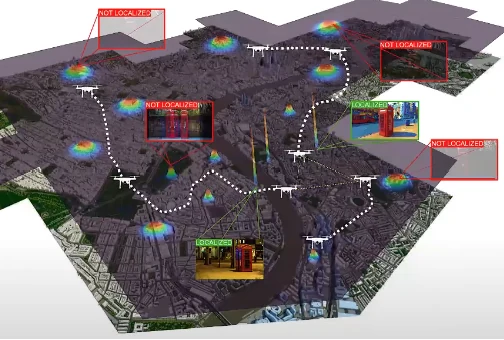
Developed a multi-robot, multi-target planning and localization algorithm combining deep Q-learning with a graph neural network. The method outperformed Dec-SB and Random Walker algorithms for active information acquisition.

Real-Time Neural Signed Distance Function (SDF) for Robotic Manipulation — research illustration

Real-Time Neural Signed Distance Function (SDF) for Robotic Manipulation

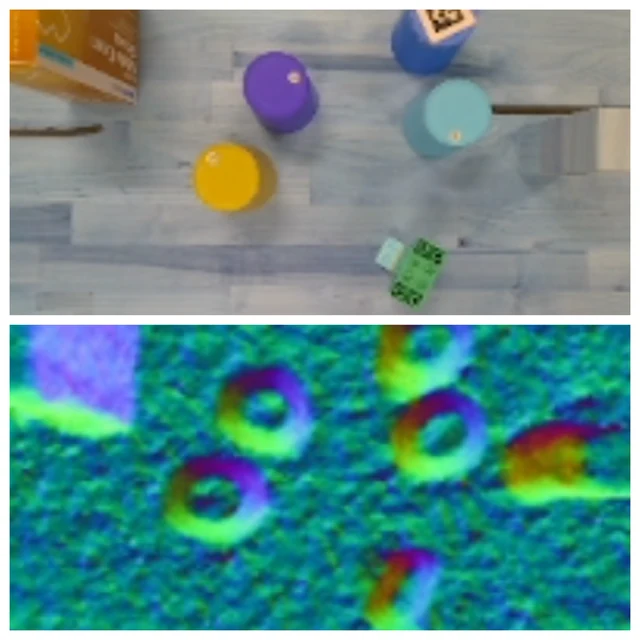
Developed a real-time Signed Distance Function (SDF) generator in ROS to provide 3D spatial awareness for the Franka Emika Panda robot. Implemented an online continual-learning pipeline from depth images with self-supervised loss and optimized GPU-based reconstruction for integration with a 100 Hz control loop, enabling collision avoidance, motion planning, and adaptive manipulation.

Distributed Learning with Graph Neural Networks — research illustration

Distributed Learning with Graph Neural Networks

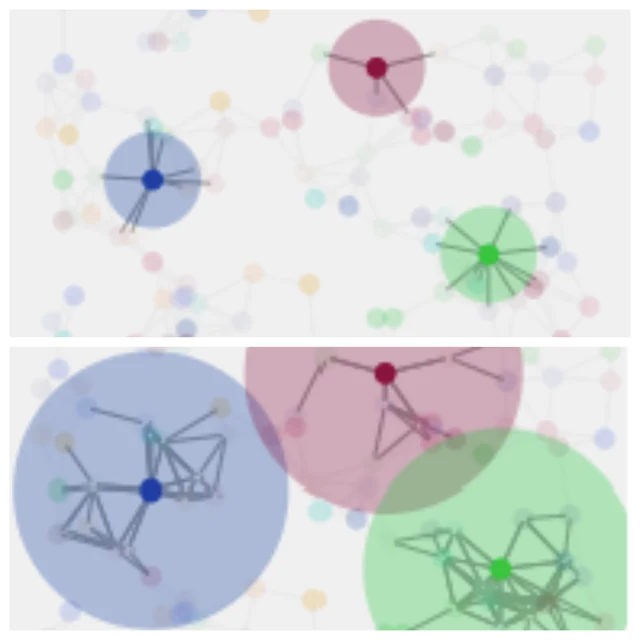
Developed a Graph Neural Network to learn a distributed policy that mimics the optimal centralized controller considering a multi-agent system with N agents tasked with controlling a dynamical process, while ensuring collision and spread avoidance.

Motion Planning for Self-Driving Car — research illustration

Motion Planning for Self-Driving Car

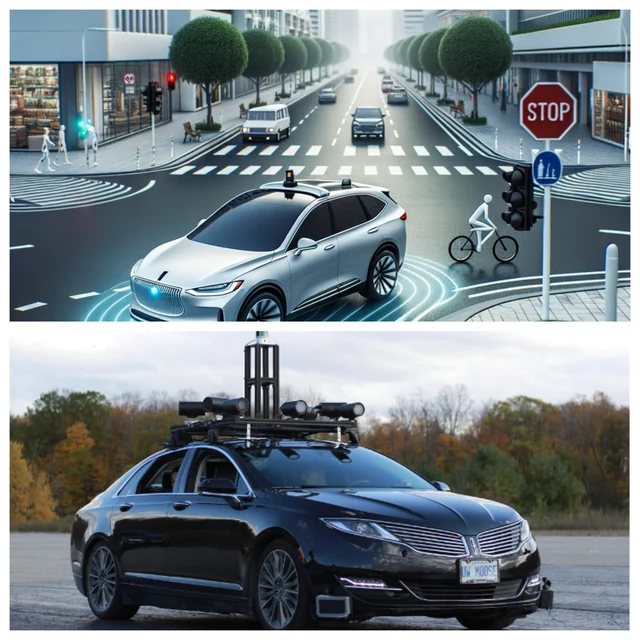
Developed a motion planning stack in CARLA that avoids static and dynamic obstacles, tracks lane centerlines, and handles stop signs. The stack includes behavioral planning, static collision checking, path selection, and velocity profile generation.

Additional Projects

MatchMaster: Real-Time Tennis Analytics with YOLO and CNN — research illustration

MatchMaster: Real-Time Tennis Analytics with YOLO and CNN

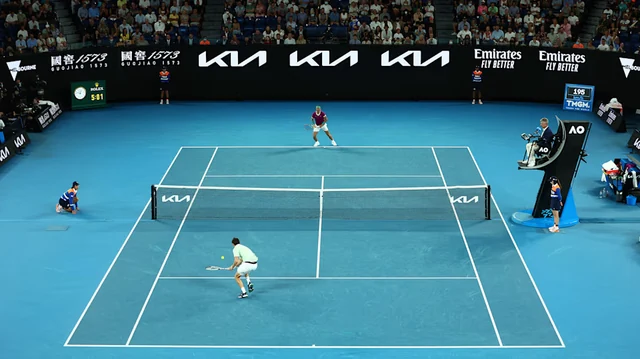
Developed a computer vision-based AI system with YOLO for player and ball detection and a custom CNN for court mapping, delivering real-time analytics to optimize player strategies and identify performance gaps.

Two View Stereo — research illustration

Two View Stereo

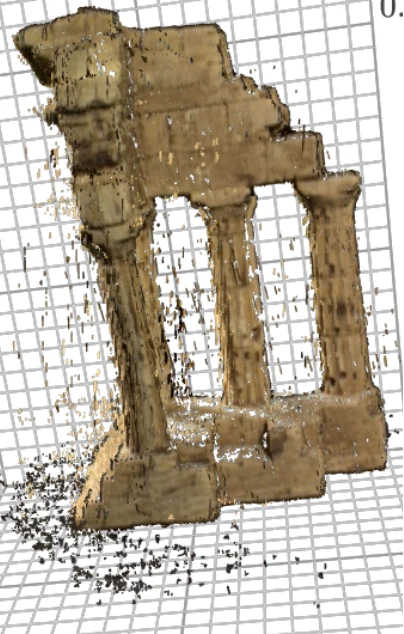
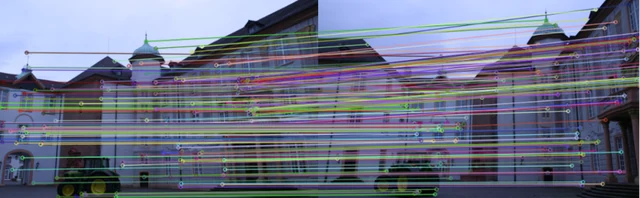
This project implements a two-view stereo algorithm to convert multiple 2D viewpoints into a 3D reconstruction of the scene.

3D Reconstruction from two 2D images — research illustration

3D Reconstruction from two 2D images

This project explores the classical computer vision technique (non-deep learning) of converting 2D images into 3D Reconstruction.

On the Blind Face Restoration – A Diffusion Model Approach — research illustration

On the Blind Face Restoration – A Diffusion Model Approach

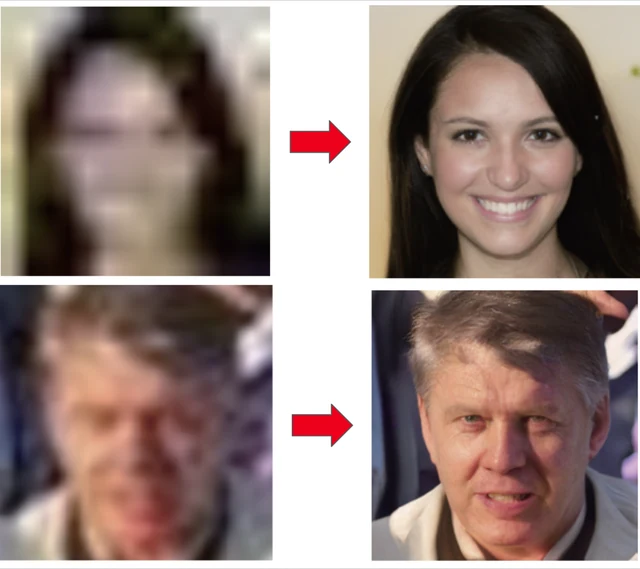
Implemented a diffusion-based method using a Markov chain and L1-trained restoration backbone to robustly restore severely degraded facial images with enhanced realism and fidelity, using pretrained models to simplify training.

MLOps Pipeline for Bone Fracture Classification & Deployment on Cloud Platforms — research illustration

MLOps Pipeline for Bone Fracture Classification & Deployment on Cloud Platforms

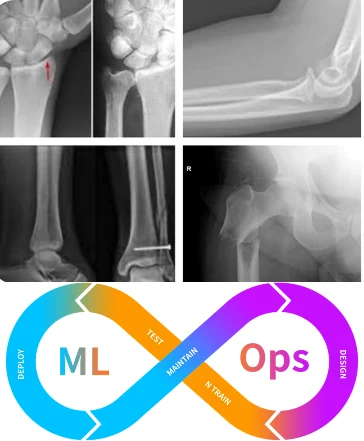
Developed an end-to-end machine learning pipeline for classifying bone fractures from X-ray images, using MLOps practices with DVC, and deploying solutions on both Azure and AWS. Developed and deployed a Flask-based web interface enabling real-time image upload and fracture detection.

RSNA STR Pulmonary Embolism Detection — research illustration

RSNA STR Pulmonary Embolism Detection

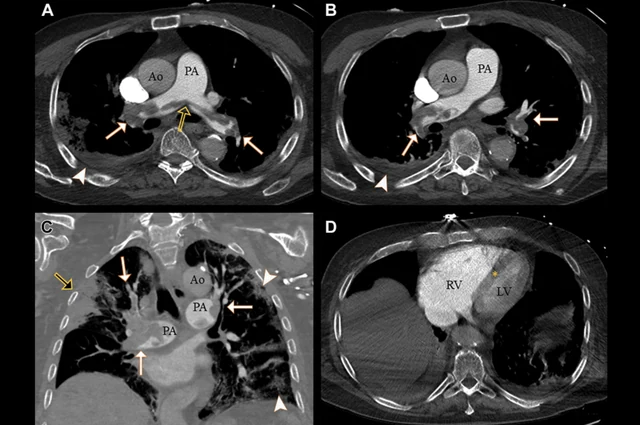
Developed the Pulmonary Embolism Detection model based on CNN (Efficientnet-b0) with a weighted log loss of 0.08 for reducing human delays and errors in detection and treatment of PE from chest CT pulmonary angiography images.

Customer-Experience Enhancement System

Developed a customer-experience enhancement system to support child care during customer service visits, as a final project for ESE 514: Embedded System. The system combines a dino game, a face-tracking pan-tilt camera, and an LCD and speaker for interactive music engagement.

Predicting Movie Popularity — research illustration

Predicting Movie Popularity

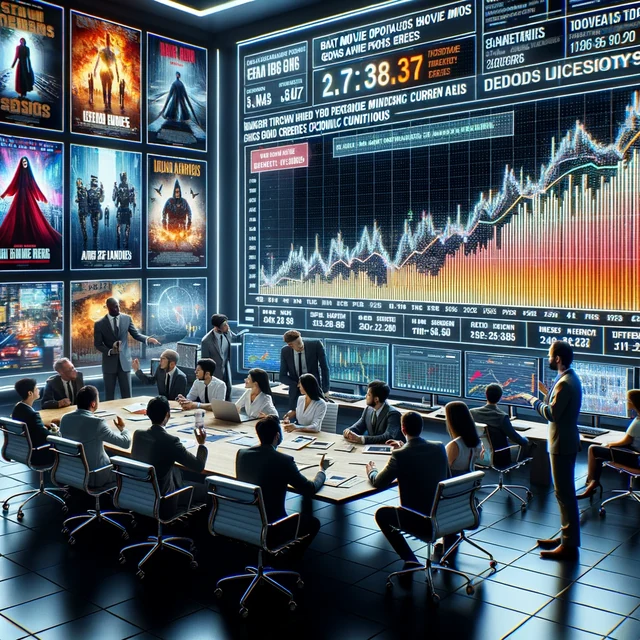
Studied relationships between movie popularity, runtime, genre, and economic conditions using Random Forest and XGBoost models, achieving strong predictive accuracy and identifying potential genre-specific trends during economic fluctuations.

Predictive Analytics and Myth-Busting: COVID-19 Forecasting and Weather Impact Analysis — research illustration

Predictive Analytics and Myth-Busting: COVID-19 Forecasting and Weather Impact Analysis

Developed a forecasting model for predicting COVID-19 cases for 81 countries using DNN and LGBM with an accuracy of 97.6% - 99.8%. Dispelled rumors regarding the weather’s role in COVID-19 transmission; examined and demonstrated that weather had little to no role in the spread of COVID-19.

Education

University of Southern California logo

University of Southern California

Doctor of Philosophy (PhD) in Computer Science

Specialization: Robotics & Machine Learning

August 2024 – Present

University of Pennsylvania logo

University of Pennsylvania

Master of Science in Electrical & Systems Engineering

Specialization: Robotics & Machine Learning

September 2022 – May 2024

Additional Education

Undergraduate Education

Veer Surendra Sai University of Technology emblem
Veer Surendra Sai University of Technology

Bachelor of Technology in Electrical Engineering

August 2017 – May 2021

Online Specializations & Courses

Specializations
  • Deep Learning Specialization by deeplearning.ai
  • Self-Driving Cars Specialization by University of Toronto
  • Machine Learning Engineering for Production (MLOps) Specialization
  • Algorithms Specialization by Stanford University
  • IBM Data Science Professional Certificate
  • Applied Data Science with Python Specialization by University of Michigan
  • Business Analytics Specialization by Wharton School of the University of Pennsylvania
  • Python for Everybody Specialization by University of Michigan
Courses
  • Machine Learning by Stanford University
  • Google Cloud Business Professional Accreditation by Google Cloud
  • Deep Learning Specialization by deeplearning.ai
  • Introduction to Programming with MATLAB by Vanderbilt University